About Liquid Dyes
Liquid Dyes
We are reckoned among the leading manufacturers and exporters of high quality Liquid Dyes, which are especially in demand for convenience in use. Our company offers a wide range of Liquid Dyes in various grades for a wide range of application in textile, paper, dyestuff manufacturing industries. The major benefit of using Liquid Dyes is that it does not leave dust as compared to powdered dyes, in several different solvents and medium. These dyes are easier and safer to work with. Customers can contact us for all their requirements. We offer it in different packing options.
A few notable features of Liquid Dyes
- Easy And Safe Ti Use Than The Powdered Dyes
- Convenient In Applications
- Eliminates Dye Dusting
- Accurate In Composition
MOQ 50kg:

 Versatile Industrial Application
Liquid dyes offer a reliable solution for industrial coloring needs, making them ideal for textiles, leather, paper, ink, wood, plastic, and detergents. With a purity of 99% and broad compatibility with various binders, these dyes easily integrate into diverse manufacturing processes, delivering vibrant and long-lasting colors. Their physical form and packaging facilitate convenient handling and storage for manufacturers and exporters.
Stable & Safe PerformanceDesigned for operational safety, liquid dyes are non-poisonous, have a ph level between 6-8, and possess less than 1% moisture. They provide consistent solvent color and excellent water resistance, making them suitable for harsh processing environments. Maintaining shelf life up to two years, they ensure stability and reliability during extended storage and usage.
Easy Handling & StorageFor optimal results, store these liquid dyes in cool, dry, and well-ventilated spaces. Available in multiple drum sizes, from 1L to 200L, they suit small-scale to large industrial requirements. Always wear protective gloves and eyewear during handling to ensure safety and maintain product integrity throughout the process.
FAQs of Liquid Dyes:
Q: How are liquid dyes applied in industrial coloring processes?
A: Liquid dyes are directly integrated into industrial coloring formulations and are compatible with a wide range of binders, making them suitable for dyeing textiles, leather, paper, ink, wood, and plastic. The dyes are soluble in water and ethanol, allowing easy mixing and dispersion during manufacturing.
Q: What are the major benefits of using these liquid dyes in production?
A: These dyes provide high staining power, excellent tinctorial strength, and good resistance to light and wash. Their consistent color output, broad compatibility, and non-poisonous profile make them dependable for various industries, ensuring long-lasting and vibrant results with safety in mind.
Q: When should liquid dyes be stored and handled with precaution?
A: Always store liquid dyes in cool, dry, and well-ventilated areas to maintain product quality and prolong shelf life. When handling, especially during mixing or application, it is essential to wear protective gloves and eyewear to prevent direct contact with skin and eyes.
Q: Where are liquid dyes commonly used?
A: Liquid dyes are widely used across the textile industry, paper manufacturing, leather finishing, ink production, wood staining, detergent formulation, and plastic coloring. Their versatility and efficacy make them a preferred choice for manufacturers, exporters, and suppliers in India and beyond.
Q: What is the recommended process for dye application on materials like textile and wood?
A: For optimal results, dilute the liquid dye according to the materials requirements and the desired shade. Mix thoroughly to achieve consistent coloration, and ensure that the carrier binder is suitable for the dyes formulation. Post-application, materials should be cured or rinsed as per industrial standards to fix the color and enhance resistance.
Q: What packaging sizes are available and what storage conditions should be maintained?
A: Liquid dyes are available in HDPE drums or carboys in sizes ranging from 1L to 200L, accommodating various batch requirements. Ensure storage in cool, dry, well-ventilated spaces to prevent quality degradation and extend shelf life up to two years.
 Call Us : 07313726028


 English
 Spanish
 French
 German
 Italian
 Chinese (Simplified)
 Japanese
 Korean
 Arabic
 Portuguese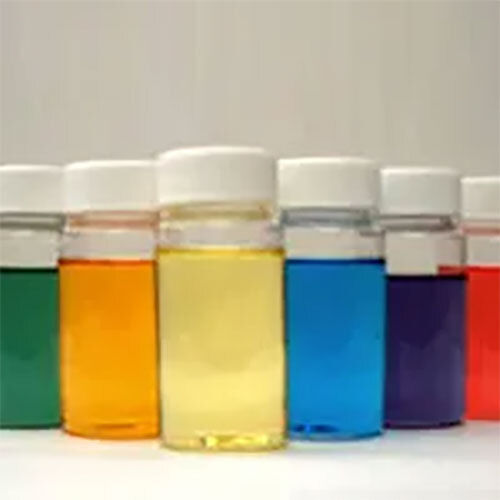




 Send Inquiry





 Send Inquiry

 Send Inquiry
 Send Inquiry
 Send SMS